Austin American-Statesman
- 3.1
- Rating
- 10.00K
- Installs
- Free
- Price

 Analysis by App-foxy
When I open Austin American-Statesman, I am looking for one thing: a practical way to keep up with Austin without jumping between unrelated sources. This is a free news and magazines app from Hearst Newspapers - LLC, built around local reporting, sports, politics, alerts, puzzles, and access to the daily newspaper. That combination makes it more focused than a general news reader, but it also means its value depends heavily on how closely Austin news matches your everyday interests.
I would describe it as a local-news companion rather than an all-purpose replacement for every news app on a phone. It is aimed at readers who want Austin coverage gathered in one place and who may also appreciate newspaper-style reading. The app is available to everyone by age rating, and the entry cost is easy: you can install it for free. However, the presence of in-app purchases means the free download should not be confused with unlimited access to every part of the experience.
How I would decide whether it belongs on your phone
My first decision criterion would be location. If Austin is where you live, work, study, or regularly visit, the app has a clear purpose. If you only want broad national headlines, a general news aggregator will probably be more efficient. The Statesman’s appeal comes from local context: city politics, regional sports, community developments, and the kind of updates that can affect a normal day in Central Texas.
You May Also Like

 Pandora - Music & Podcasts
Pandora’s Music Is Easy to Start, but Harder to Recover
Pandora’s strength is its low-effort path from a seed to a station. Its weak spot is how much confidence it asks you to place in connection, setup, and quiet recovery.

 8 Ball Pool
 Is Built on Rivalries, Rematches, and Routine
A close look at the rivalries, rematches, shared routines, and unanswered safety questions that turn a quick pool match into a persistent mobile community.

 Samsung Music
’s Quiet Strength Is Playing What You Already Own
Its reach comes less from spectacle than from dependable access to a personal library. That simplicity is both the app’s strongest retention engine and its ceiling.

 AccuWeather: Weather Radar
AccuWeather Review: A Quick, Clear Forecast for Everyday Decisions
For everyday plans, the best forecast is the one you can understand quickly. AccuWeather makes rain timing, radar, and local conditions easy to act on, with a few trade-offs.

 Hill Climb Racing
Why Hill Climb Racing Still Turns Crashes Into One More Run
A tiny car, a bumpy hill and one more upgrade: Hill Climb Racing keeps resurfacing because its simple chaos makes every near-miss feel personal.

 AliExpress - Shopping App
AliExpress Makes Global Shopping Feel Personal, but Shoppers Bear the Risk
AliExpress turns a global marketplace into a pocket-sized discovery engine. Its reach is useful, its shopping loop compelling, and its trade-offs easy to miss.
More From Our News Desk
View All News


The second criterion is reading style. Some people want a quick stream of headlines, while others prefer the feeling of opening a newspaper and browsing several sections. This app tries to serve both habits by bringing together breaking updates and the daily newspaper. I found that distinction useful because a short alert and a longer article answer different needs. One tells me that something happened; the other helps me understand why it matters.
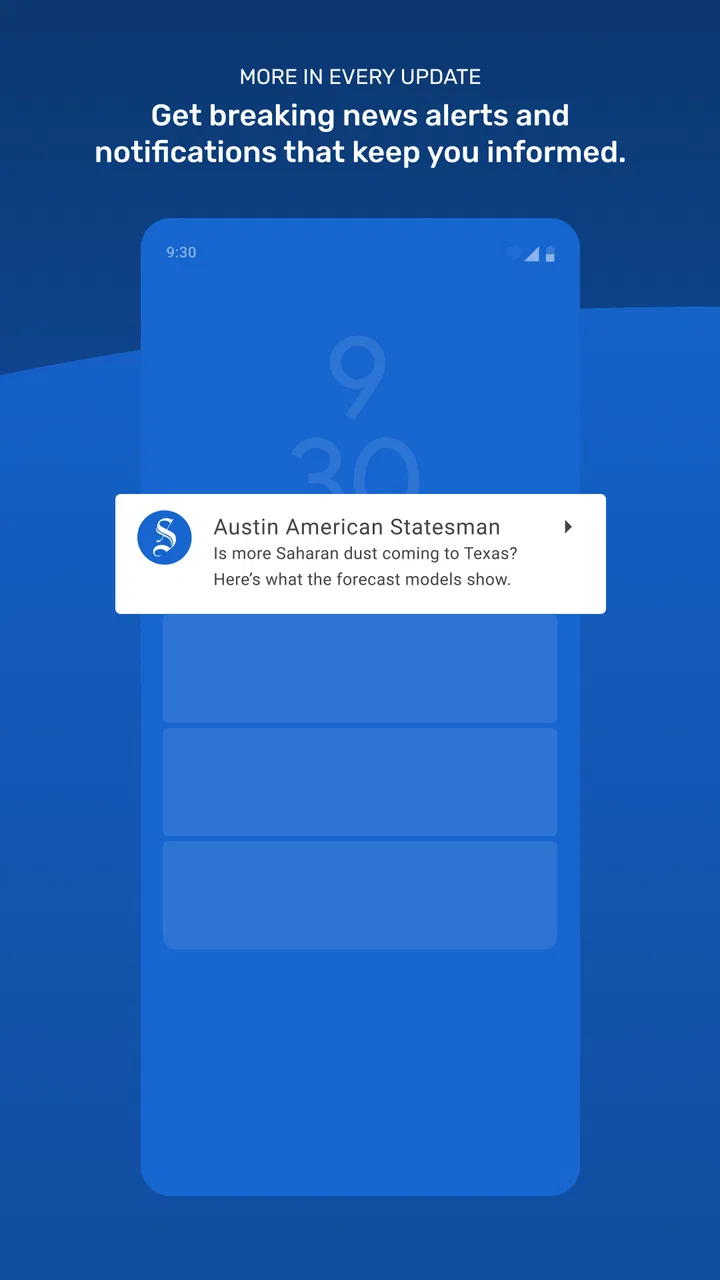
The third criterion is whether alerts will genuinely help you. Notifications can be valuable for major local developments, severe disruptions, or sports news you actively follow. They can also become noise if you enable every available alert without thinking about your routine. My practical advice is to begin with only the categories that affect you directly. A local-news app is most useful when it informs you at the right moments rather than constantly interrupting you.
There is also a question of newspaper access. The daily newspaper element is important for readers who like a planned reading session, but it may feel less natural if you only consume short articles. Before treating the app as your main news source, I would spend a few days using it in two ways: checking headlines quickly in the morning and setting aside time later for deeper reading. That test reveals whether the newspaper format adds value or simply duplicates what you already read elsewhere.
The app has an average rating of 3.1 from around 399 ratings, with roughly 250 written reviews. I would not treat that score as a final verdict, but I would treat it as a reason to keep expectations realistic. News apps are judged not only by their journalism, but also by loading behavior, account access, notifications, article presentation, and subscription boundaries. A middling score can reflect friction around the whole product rather than the usefulness of Austin reporting itself.
A realistic morning with the app
Imagine that I live in Austin and have a busy commute. I might open the app before leaving home, scan the main local headlines, and check whether there is a story affecting my route or neighborhood. During lunch, I could return for a politics article or a sports update instead of searching several sites. In the evening, I might browse the newspaper edition more slowly, then finish with a puzzle.
That routine shows the app’s strongest idea: it can occupy several small moments without requiring a separate tool for every kind of local content. The important trade-off is attention. If I only have thirty seconds, I want a clear headline view. If I have twenty minutes, I want enough structure to move naturally from one section to another. Your experience will depend on which of those habits is more common for you.
Where the Statesman experience is strongest
The clearest advantage is its local focus. National apps can provide a huge volume of current events, but they often make local stories compete with international headlines, celebrity news, technology, and opinion from everywhere. Here, Austin is the center of the experience. For a resident, that focus can reduce searching and make the app feel more relevant from the first glance.
I also like the way the content areas complement one another. News and politics help me understand civic developments, while sports gives the app a more immediate, everyday rhythm. Alerts are useful when I need information quickly, and puzzles offer a lighter reason to return. The daily newspaper adds a more deliberate reading mode, which is something many fast-moving news feeds do not emphasize.
The strongest reason to choose this app is concentration: Austin coverage, newspaper reading, and local extras live together instead of being scattered across separate services. That does not make it automatically better than every alternative, but it gives it a distinct role. Someone who wants a local information routine may value that consistency more than a larger catalog of unrelated stories.
Another strength is that the app is not limited to one type of local reader. A politics-focused user can approach it differently from a sports fan, and a newspaper reader can use it differently from someone who checks alerts. I would not expect every section to matter equally to me, but having several entry points makes the app more adaptable than a single-topic publication.
The puzzle content is an easy feature to underestimate. In my view, it changes the app from a purely urgent tool into something that can also support a quiet break. That matters for readers who enjoy the newspaper experience as a habit rather than treating news as a stream of emergencies. It is not a reason by itself to install the app, but it can make the product feel more complete for the right audience.
Practical habits that make it easier to use
I would start by deciding what I want the app to do before changing any settings. If my priority is local awareness, I would make a short headline check part of my morning. If my priority is the newspaper, I would avoid judging the app after a rushed first session and instead read it when I have enough time to explore its sections.
A second useful habit is separating urgent reading from background reading. Alerts should serve the first purpose; the newspaper and longer articles serve the second. Treating every notification as a command to read immediately can make the app tiring. Treating alerts as a signal to return when convenient gives them a more sensible role.
A third tip is to use the sports and puzzles sections as a test of long-term fit. Many local-news apps seem useful during a major event but become forgotten afterward. If the Statesman’s sports coverage, daily reading flow, or puzzles give you reasons to return on ordinary days, the app is more likely to become part of your routine rather than a temporary download.
Finally, I would pay attention to how much of my reading happens inside the daily newspaper compared with individual articles. That distinction helps clarify whether I am choosing the app for a publication experience or simply using it as another headline feed. If the newspaper view is the part I return to most, the app has earned a stronger place in my reading habits.
What the developer’s track record means in practice
Hearst Newspapers - LLC is the developer behind the app, and the product has been available since Mar 20, 2013. That long presence suggests this is an established newspaper application rather than a short-lived experiment. The current version is 202608.28, and it requires Android 9 or later, so users with older devices should check compatibility before planning around it.
The install count is over 10 thousand, which places it in a more specialized space than mass-market news platforms. I see that as consistent with its purpose: this is a regional publication app, not a universal destination intended for every reader. A smaller audience is not automatically a weakness, but it does reinforce the need to decide whether Austin-specific coverage is important enough to justify another app on your device.
Because the app has been around for years, I would expect readers to approach it as part of a continuing publication relationship, not just as a one-time download. That can be positive if you value continuity in local reporting. It also means the most important question is not whether the app has a long feature list, but whether its day-to-day reading experience fits your expectations.
Where another type of news app may fit better
The best alternative depends on the job you need done. A general news aggregator is usually a better choice if you want many regions, subjects, and publishers in one stream. It may help you compare national coverage quickly, while the Statesman is more useful when Austin itself is the priority. Choosing between them is less about which one is universally superior and more about whether breadth or local depth matters today.
A broadcaster’s app may suit someone who prefers short updates, video, or live coverage. A newspaper app such as this one makes more sense for readers who want articles, sections, and a daily edition. I would choose the broadcaster-style option when speed and visual updates are my main concerns, but I would lean toward the Statesman when I want a more settled reading session and a publication centered on Austin.
Social media can also appear to be a substitute because it delivers local posts quickly. In my experience, though, speed and organization are not the same thing. Social feeds can be useful for discovering what people are discussing, while a dedicated news publication is easier to use when I want a coherent article and a dependable place to return. I would not rely on social posts alone for a complete local-news routine.
Newsletters and browser bookmarks may be better for readers who dislike installing apps or managing notifications. They can keep a phone less cluttered and may work well for someone who checks local news only once or twice a week. The app becomes more compelling when I want alerts, puzzles, sports, politics, and newspaper reading available in one dedicated space.
There is also a clear audience that should probably skip it. If I do not live near Austin, have no regular connection to the area, and mainly want international or national reporting, the local focus will feel narrow. Likewise, if I want an entirely free reading experience with no purchase prompts, I would examine the access model carefully before making it my primary source. The app is not a poor choice for those readers; it is simply aimed at a different need.
Understanding the free download and paid access
The app costs nothing to download, but in-app purchases range from $14.99 to $69.99 per item. Those figures appear only once here because the practical point is more important than the numbers: I would install it first, explore the available sections, and identify which reading areas are open before committing to paid access. That approach prevents me from assuming that every newspaper feature is included automatically.
I would also consider how often I read local news. A frequent reader who opens the app most days may see more value in paid access than someone who checks it during occasional Austin trips. The right decision depends on use, not on the download price alone. A free installation lets you evaluate the fit, but it does not remove the need to understand what continued reading may cost.
The cost of switching is mostly behavioral. Moving from a general news feed means learning to use a local publication as a destination. Moving from a website or newsletter means deciding whether alerts and the newspaper format are worth adding to your phone. Moving from another local source means comparing reading comfort and coverage rather than simply counting features.
Before switching completely, I would keep my usual news source for a short overlap period and use this app during the same part of the day. I would compare three things: whether the local stories I care about are easy to find, whether the article format keeps me reading, and whether the access model feels reasonable for my frequency of use. This simple test is more reliable than judging the app from its first launch.
Small limitations that affect the decision
The local focus can become a limitation if your interests are broad. I may enjoy Austin politics and sports, but still need another source for national context, international events, specialist subjects, or a wider range of viewpoints. In that situation, this app works best as a complement rather than a complete replacement.
The mixed rating also makes me cautious about recommending it blindly. I would not let the score outweigh the app’s clear purpose, but I would give myself time to test navigation, article access, and notifications on my own device. News apps can feel very different depending on reading habits, phone size, connection quality, and how often a person encounters paid content.
The purchase structure is another point of friction for readers who want simple pricing. Since the app is free to install but includes paid items, I would check the purchase screen carefully and avoid assuming that a free download equals unlimited newspaper access. That is not a criticism of local journalism; it is simply part of making an informed choice.
Finally, the app may be too specialized for households with mixed interests. One person may want Austin sports, another may want national headlines, and someone else may prefer puzzles without news alerts. The Statesman can serve the local-news reader well, but it may not replace every person’s preferred source on a shared device.
My recommendation for Austin readers
I recommend Austin American-Statesman to people who want a dedicated Austin news habit and appreciate having local reporting, politics, sports, alerts, puzzles, and a daily newspaper in one app. I especially see it fitting residents who read local news regularly and want more structure than a social feed provides. The free download makes it reasonable to test before deciding whether the paid parts match your routine.
I would not recommend making it your only news source if you need broad national or international coverage. I would also hesitate if you rarely read Austin news or strongly prefer a completely free, ultra-simple headline stream. In those cases, a general aggregator, broadcaster-style app, newsletter, or browser-based routine may fit better.
For me, the decision comes down to relevance rather than raw scale. This is a focused local publication app with a useful mix of serious reporting and lighter newspaper features. Its middling average rating and paid access mean I would approach it thoughtfully, not automatically. But if Austin is central to your life, the app’s focused local routine can be more useful than a larger news feed that makes you search for the stories you actually need.
My final advice is to install it with a specific trial plan: read the local headlines, test one alert category, browse the newspaper, and try the puzzles on separate days. If those parts support your real routine, keep it as your Austin hub. If you find yourself opening it only for occasional headlines while relying on another source for everything else, remove the extra step and choose the alternative that matches your reading style.
FAQs for Austin American-Statesman
01What is the Austin American-Statesman app?
The Austin American-Statesman app is a digital news platform focused on Austin, Central Texas, and surrounding communities. It provides access to local reporting, breaking news, politics, sports, business, entertainment, opinion pieces, and investigative journalism. After exploring the app, I found that its main strength is delivering regional coverage in a convenient mobile format for readers who want news updates while traveling or away from a computer.
02Is the Austin American-Statesman app free to download and use?
The app can generally be downloaded without an upfront charge, but access to all articles and premium content may require a subscription or account. Some stories may be available for free, while frequent readers can encounter a paywall after reaching a limited number of articles. Subscription prices, trial offers, and included benefits can change, so it is important to review the current terms shown in the app before subscribing.
03What type of content can I read in the app?
The Austin American-Statesman app covers a broad range of topics relevant to the Austin area. Users can typically find local and state news, high school and professional sports, community updates, crime reports, politics, food, culture, entertainment, and opinion content. The app is particularly useful for readers who want local reporting and context that may not be available through national news applications.
04Does the app send breaking-news notifications?
Yes, the Austin American-Statesman app may send push notifications for breaking news, major local developments, sports updates, and other important stories. Notifications can be useful when you want immediate awareness of events in Austin and Central Texas, although they may become frequent depending on your interests. After installation, users should review the notification settings and disable categories they do not want to receive.
05Can I use the Austin American-Statesman app without an internet connection?
The app primarily depends on an internet connection to load current articles, images, videos, and breaking-news updates. Some versions or subscription features may support saving content for later reading, but offline availability can vary by device, operating system, and app version. If you expect to read while traveling, it is best to open or save articles beforehand and verify that the desired content remains accessible offline.
Pros
- Live updates on Texas politics
- sports
- business
- and local events.
- Access to investigative journalism and in-depth regional reporting.
- Personalized news feed helps prioritize topics and nearby communities.
- Breaking-news alerts keep you informed about important local developments.
- Digital subscription may include access to the newspaper’s broader online archive.
Cons
- Most premium articles require a paid subscription after limited access.
- Coverage is primarily focused on Austin and Central Texas readers.
- Frequent notifications may feel excessive unless carefully customized.
- Some content may load slowly on weaker mobile connections.
- The app’s value depends heavily on your interest in local news.

Austin American-Statesman
Gallery